
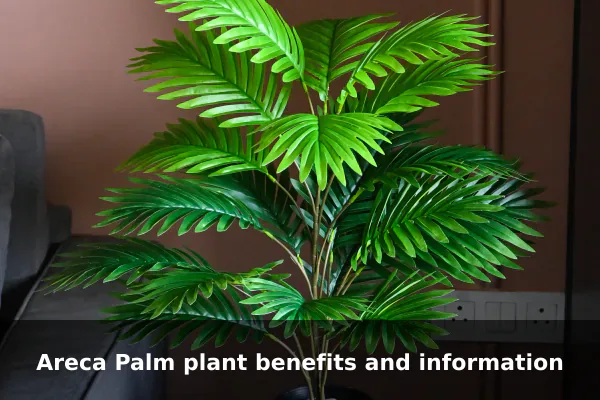
The Areca Palm is one of the most recognizable indoor palms in the world, prized for its arching, feathery fronds and clean tropical look. Whether placed in a living room corner or used as a soft screen on a patio, it brings a relaxed, garden-like feel that few houseplants can match.
This guide explains what the Areca Palm really is, the practical benefits it offers, what science actually says about its air-purifying reputation, and how to keep it healthy indoors and outdoors. The goal is to give you clear, source-aware information so you can decide whether this palm fits your home and lifestyle.
What Is the Areca Palm?
The Areca Palm’s currently accepted botanical name is Chrysalidocarpus lutescens, with the widely used synonym Dypsis lutescens still appearing in many garden references. It is also known as the Yellow Palm, Golden Cane Palm, Butterfly Palm, or Bamboo Palm, depending on the region.
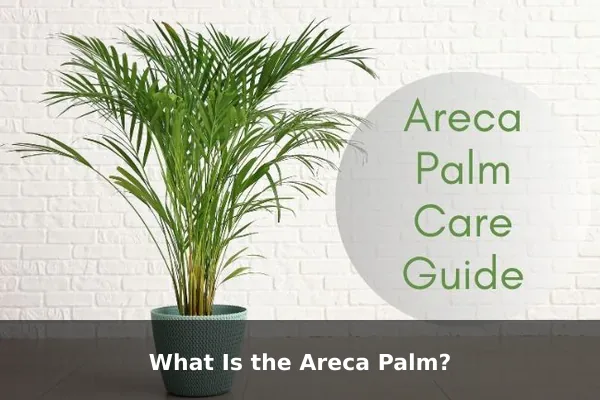
It is native to Madagascar and is now cultivated across many tropical and subtropical regions. The plant forms clumps of slender, yellow-green canes with arching, pinnate fronds that give it a soft, fountain-like silhouette.
Quick identification traits
- Multiple smooth, ringed canes growing from a clumping base
- Yellowish-green stems that intensify in bright light
- Feathery, arching fronds with many narrow leaflets
- Indoor height typically 1.8–3 m; taller outdoors in suitable climates
Key Benefits of Areca Palm
Most real-world benefits of the Areca Palm are practical and aesthetic rather than medicinal. Used well, it transforms a room or garden corner without demanding constant attention.
Decorative and lifestyle benefits
- Tropical ambience: Its full, arching habit instantly softens hard architectural lines.
- Natural screening: Outdoors in warm climates, clumps can be used as a living privacy screen.
- Calmer indoor spaces: Like many leafy houseplants, it adds greenery that many people find visually relaxing.
- Beginner-friendly: When light and watering are right, it is forgiving compared with many fussy tropicals.
- Widely available: Easy to find in nurseries, often sold as multi-cane potted specimens.
Air-Purifying Claims: What the Evidence Really Means
The Areca Palm is frequently included in lists of air-purifying plants. This reputation comes largely from the well-known NASA Clean Air Study, which tested several common indoor plants for their ability to remove certain volatile organic compounds.
It is important to read those findings carefully. The NASA work was conducted inside small, sealed chambers, not typical homes. In a normal room with regular air exchange, furniture, and human activity, the measurable effect of a few houseplants on overall air quality is generally much smaller than popular articles suggest.
A fair, honest summary is this: an Areca Palm can contribute to a greener, more pleasant indoor environment, but you should not rely on it as a substitute for proper ventilation or air filtration when air quality is a real concern.
How to Care for Areca Palm Indoors
Indoor success with Areca Palm comes down to consistent light, careful watering, and stable warmth. It dislikes extremes more than it dislikes any single condition.
Light
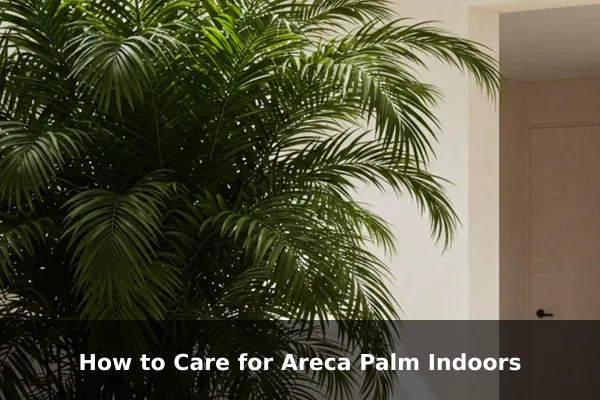
Provide bright, indirect light, such as near an east- or south-facing window with a sheer curtain. Some gentle morning sun is fine; harsh midday sun through glass can scorch fronds. In dim corners, growth slows and lower leaves yellow.
Watering and humidity
- Water when the top 2–3 cm of soil feels dry; keep the root ball evenly moist, not soggy.
- Empty saucers after watering to prevent root rot.
- Average household humidity is usually acceptable; very dry air can cause brown tips.
Soil, pot, and temperature
- Use a well-draining potting mix; a peat- or coir-based blend with perlite works well.
- Choose a pot with drainage holes; avoid oversized containers that stay wet.
- Keep temperatures roughly 18–24 °C and protect from cold drafts and air-conditioner vents.
Outdoor Growing and Landscape Use
In warm, frost-free regions, Areca Palm is widely used as a landscape plant. University extension references describe it as a clumping palm suited to tropical and warm subtropical climates, where it can reach several meters tall.
Best outdoor conditions
- Full sun to partial shade, with some afternoon protection in very hot climates
- Rich, well-draining soil with steady moisture
- Sheltered position away from strong cold winds
- Regular feeding during the growing season to prevent nutrient deficiencies common in palms
Because of its clumping habit, it works well as a privacy screen, a pool-side feature, or a soft backdrop for lower planting beds.
Common Problems and Simple Fixes
Most Areca Palm problems trace back to watering, light, or air conditions rather than serious disease.
- Brown leaf tips: Often dry air, inconsistent watering, or fluoride/chlorine sensitivity. Try filtered water and steadier moisture.
- Yellowing fronds: Could be overwatering, underwatering, or nutrient deficiency. Check soil moisture first.
- Drooping, soft canes: Usually root rot from soggy soil; repot into fresh, well-draining mix.
- Pests: Watch for spider mites, mealybugs, and scale, especially in dry indoor air. Rinse fronds and treat with insecticidal soap as needed.
- Pruning: Remove only fully brown fronds; cutting healthy green fronds weakens the plant.
Is Areca Palm Safe for Pets and People?
According to the ASPCA Animal Poison Control database, the Areca Palm (Dypsis lutescens) is listed as non-toxic to dogs, cats, and horses. This makes it a reasonable choice for households with curious pets, though chewed leaves can still cause mild stomach upset simply due to fibrous plant material.
For people, extension references generally rate this palm as low-risk, but ornamental plants are not food. The edible “heart of palm” harvested from some palms is a specialized food product; do not attempt to eat parts of an ornamental Areca Palm at home.
Best Uses and Buying Tips
When choosing an Areca Palm, a little inspection at the nursery goes a long way.
What to look for
- Multiple upright canes with healthy yellow-green color
- Fronds that are mostly green, not heavily browned or yellowed
- No sticky residue, webbing, or visible insects on stems and leaves
- Moist but not waterlogged soil and a pot with working drainage
Where it shines
- Bright living rooms, lobbies, and offices with filtered daylight
- Covered patios in warm climates
- As a soft corner specimen instead of harder-edged furniture
Conclusion
The Areca Palm earns its popularity through honest, practical strengths: graceful form, manageable indoor care, pet-friendly status, and strong landscape value in warm regions. Treat its air-purifying reputation with healthy skepticism, give it bright indirect light and balanced watering, and it will reward you with years of lush, tropical greenery.
Official references
- Royal Botanic Gardens, Kew – Plants of the World Online: Chrysalidocarpus lutescens – Authoritative botanical taxonomy, accepted name, synonyms such as Dypsis lutescens, distribution, and common-name context for Areca Palm.
- University of Florida IFAS Extension – Dypsis lutescens, Areca Palm – University extension profile with horticultural description, growing conditions, landscape use, origin, and reviewed plant information.
- North Carolina Extension Gardener Plant Toolbox – Chrysalidocarpus lutescens – Extension reference covering identification, care, houseplant use, pest issues, and human safety notes including low poison severity and toxic heart-of-palm warning.
- ASPCA Animal Poison Control – Areca Palm – Primary pet-safety reference identifying Areca Palm/Dypsis lutescens as non-toxic to dogs, cats, and horses.
- NASA Technical Reports Server – Interior Landscape Plants for Indoor Air Pollution Abatement – Primary NASA report behind many indoor-plant air-purifying claims; useful for explaining the original evidence and its sealed-chamber context.
