
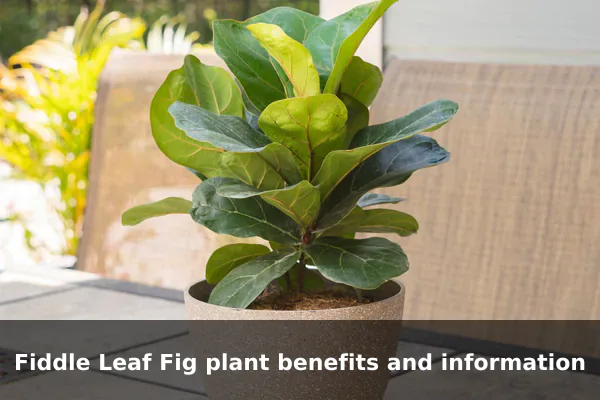
The Fiddle Leaf Fig (Ficus lyrata) has become one of the most recognizable statement houseplants in modern interiors, prized for its glossy, violin-shaped leaves and tree-like silhouette. Originally native to lowland rainforests of western and central Africa, it now lives in homes, studios, and offices around the world as a piece of living architecture.
This guide walks through what the plant actually offers indoors, how to care for it realistically, and where its benefits end and its limits begin. Expect honest expectations: the Fiddle Leaf Fig is mostly valued for visual presence and the simple pleasure of tending greenery, not for clinically proven air purification.
What Is a Fiddle Leaf Fig?
The Fiddle Leaf Fig is a broadleaf evergreen in the mulberry family (Moraceae). According to the Royal Botanic Gardens, Kew, the accepted scientific name is Ficus lyrata, and its native range covers tropical lowland forests in western Africa, where it can grow into a large tree. Indoors it typically stays much smaller, often kept as a single-stemmed specimen or a small branching tree in a deep pot.
Key Identifying Features
- Large, leathery, fiddle- or violin-shaped leaves with prominent veins.
- Upright, often tree-like growth habit when given enough light and space.
- Pale, milky sap inside stems and leaves, typical of the Ficus genus.
The Royal Horticultural Society lists it as a tender evergreen suited to warm, frost-free indoor conditions, which is why it is grown almost exclusively as a houseplant in temperate climates.
Main Benefits of Growing a Fiddle Leaf Fig Indoors
Most of the plant’s value comes from how it shapes a room and how caring for it shapes a daily routine. The benefits below are best described as design and lifestyle benefits rather than medical ones.
Strong Visual and Decor Impact
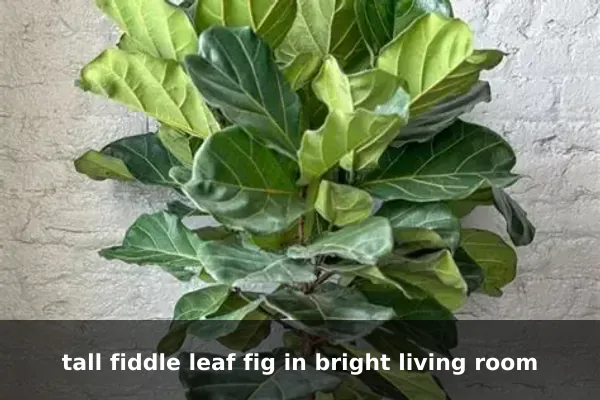
- Architectural form: tall, vertical growth fills empty corners and balances large furniture.
- Bold foliage: the oversized leaves create a focal point with minimal styling.
- Flexible style fit: it works in minimalist, mid-century, tropical, and Scandinavian interiors.
Greenery, Routine, and Wellbeing
Indoor greenery and plant care can support a calmer, more attentive daily rhythm for many people. Wellbeing effects vary by individual, so it is fair to say the Fiddle Leaf Fig may contribute to a more pleasant indoor environment without promising specific health outcomes.
- Encourages a steady care routine: watering checks, rotating for even light, wiping leaves.
- Adds living texture and color contrast to neutral rooms.
- Helps signal a cared-for space in homes, studios, and small offices.
Air Quality Claims: What to Know Before You Believe Them
Many houseplant guides claim that plants like Ficus lyrata noticeably purify indoor air. The reality is more modest. The U.S. Environmental Protection Agency’s guidance on improving indoor air quality emphasizes three core strategies: controlling pollution sources, increasing ventilation, and using appropriate air cleaners or filtration. Houseplants are not listed as a primary solution for reducing indoor pollutants in typical homes.
That does not mean a Fiddle Leaf Fig is useless. It can still:
- Increase the amount of visible greenery in a room.
- Support local humidity perception around the plant through transpiration.
- Encourage habits like opening windows and dusting, which do affect air quality.
For meaningful indoor air improvements, treat the plant as decor and rely on ventilation and filtration for actual air quality.
Basic Care Information for Healthy Growth
The Fiddle Leaf Fig has a reputation for being fussy. In practice, it is usually fine when its core needs are met consistently. Guidance from the RHS and the NC State Extension Gardener Plant Toolbox supports the following baseline.
Light
- Bright, indirect light for most of the day; some gentle direct sun is tolerated.
- Avoid deep shade, which causes weak growth and leaf drop.
- Rotate the pot every couple of weeks for even growth.
Watering and Soil
- Use a well-draining potting mix and a pot with drainage holes.
- Water when the top few centimeters of soil feel dry; empty saucers after watering.
- Avoid letting roots sit in soggy soil, which is a common cause of decline.
Temperature, Humidity, and Cleaning
- Comfortable household temperatures, away from cold drafts and heating vents.
- Moderate humidity is preferred; very dry air can brown leaf edges.
- Wipe large leaves gently with a soft, damp cloth to keep them dust-free and photosynthesizing well.

Safety, Toxicity, and Handling Cautions
The Fiddle Leaf Fig is generally considered toxic to cats, dogs, and humans if chewed or ingested, and its milky sap can irritate skin and eyes. Specific cautions to keep in mind:
- The NC State Extension lists Ficus lyrata as toxic to people and pets, with sap that may cause skin irritation.
- The RHS notes that Ficus species can be a skin allergen, so wear gloves when pruning and wash hands afterward.
- The Pet Poison Helpline identifies Ficus, including fiddle-leaf fig, as a known concern for pets, with signs that may include drooling, mouth irritation, vomiting, or skin reactions after contact with sap.
If a child or pet chews leaves or contacts a significant amount of sap, contact a medical professional, veterinarian, or local poison resource for advice based on the situation. Do not rely on general articles for emergencies.
Common Problems and Simple Fixes
Most issues trace back to light, watering, or location rather than disease. A short troubleshooting list:
- Sudden leaf drop: often caused by moving the plant, cold drafts, or sharp changes in light or watering. Stabilize conditions.
- Brown edges or spots: can indicate underwatering, very dry air, or sunburn from intense direct sun.
- Yellowing lower leaves: commonly overwatering or poor drainage; check the pot and soil first.
- Weak, leggy growth: usually too little light; move closer to a bright window.
- Pests: watch for scale, mealybugs, and spider mites, especially on leaf undersides. Treat early with appropriate, label-directed methods.
Is a Fiddle Leaf Fig Right for Your Home?
This plant rewards a stable, well-lit spot and a patient owner. It is a strong fit if you:
- Have a bright room with consistent indirect light.
- Want a single dramatic plant rather than many small ones.
- Can keep it out of reach of curious pets and small children, or are prepared to manage that risk carefully.
- Are comfortable adjusting care gradually instead of expecting instant results.
It is a weaker fit for very dim apartments, homes with free-roaming pets that chew plants, or owners who travel often and cannot maintain a steady watering routine.
Conclusion
The Fiddle Leaf Fig earns its popularity through presence: a tall, sculptural plant with bold leaves that anchors a room and invites a small daily ritual of care. Its real benefits are aesthetic and lifestyle-oriented, supported by reasonable greenery and humidity around the plant, rather than dramatic air purification. With bright filtered light, careful watering, and respect for its mildly toxic sap, Ficus lyrata can be a long-lived, rewarding indoor companion for the right home.
Official references
- Royal Botanic Gardens, Kew – Plants of the World Online: Ficus lyrata – Authoritative taxonomy, accepted scientific name, native range, and general botanical context for Ficus lyrata.
- NC State Extension Gardener Plant Toolbox: Ficus lyrata – University extension profile with identification, care notes, and toxicity information for humans, cats, and dogs.
- Royal Horticultural Society: Ficus lyrata – Official horticultural profile covering cultivation, hardiness, plant characteristics, and handling caution for skin allergen risk.
- Pet Poison Helpline: Ficus – Primary pet-poisoning reference for Ficus species, explicitly including fiddle-leaf fig, with signs of ingestion and sap irritation.
- U.S. Environmental Protection Agency: Improving Indoor Air Quality – Government indoor-air guidance that helps qualify or counter houseplant air-purifying claims in real homes and offices.
