
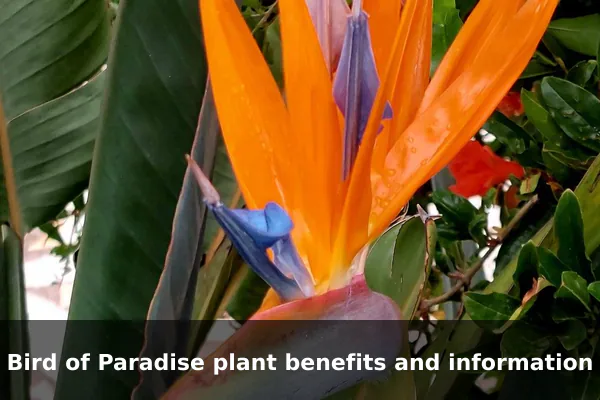
The Bird of Paradise is one of the most recognizable tropical ornamentals in the world, prized for its dramatic banana-like foliage and striking orange-and-blue flowers that resemble an exotic bird in flight. Whether grown as a bold indoor statement piece or a landscape focal point in warm climates, it brings instant tropical character to any space.
This guide focuses on the practical benefits, identification, care basics, and safety considerations of Strelitzia reginae, the species most commonly sold as Bird of Paradise. Its main value is decorative, architectural, and biophilic rather than medicinal, and understanding that helps set realistic expectations before you buy one.
What Is the Bird of Paradise Plant?
According to Kew Science’s Plants of the World Online, the accepted botanical name is Strelitzia reginae, native to South Africa. It is an evergreen, clump-forming perennial in the family Strelitziaceae, often confused with the much larger Strelitzia nicolai (Giant White Bird of Paradise) and with true banana plants.
Key Identification Features
- Leaves: Long-stalked, leathery, paddle-shaped, gray-green, resembling small banana leaves.
- Flowers: Boat-shaped green-and-pink bract holding vivid orange sepals and blue petals.
- Size: Typically 3 to 5 feet tall indoors; up to around 5 to 6 feet outdoors in suitable climates, per university extension references.

Main Benefits of Bird of Paradise Plants
The benefits of Bird of Paradise are mostly ornamental and experiential. It is not generally documented as a medicinal or edible plant, and reputable extension sources emphasize its decorative and landscape role.
Ornamental and Design Value
- Architectural foliage: Large, upright leaves create instant tropical structure.
- Signature blooms: The crane-like flower is one of the most photographed tropical flowers worldwide.
- Long-lasting interest: Evergreen leaves provide year-round greenery, and flowers can persist for weeks.
Wellbeing and Biophilic Benefits
Like other large-leaved houseplants, Bird of Paradise can contribute to a calming, nature-connected interior. General biophilic design research suggests indoor greenery may support a sense of relaxation and visual comfort, although specific air-purifying claims for any single houseplant should be treated cautiously, as real-world conditions differ greatly from controlled lab studies.
Landscape and Privacy Benefits
- Useful as a tropical accent in frost-free gardens (per UF/IFAS and RHS guidance).
- Works as a clump-forming screen or border in warm climates.
- Pairs well with palms, gingers, and other broad-leaved tropicals.
Indoor and Outdoor Growing Benefits
Few ornamentals work as flexibly across indoor and outdoor settings. Indoors, Bird of Paradise functions as a sculptural floor plant for bright rooms; outdoors, it anchors tropical-style beds in mild regions.
As a Houseplant
- Thrives near large, sunny windows in living rooms, lobbies, and offices.
- Looks elegant in tall ceramic or woven planters.
- Tolerates average indoor humidity better than many tropicals.
In the Landscape
- Suited to USDA-equivalent warm zones; RHS lists it as tender, so it is grown under glass in cooler regions.
- Excellent as an entry accent, poolside planting, or container specimen on patios.
Basic Care Information for Healthy Growth
Care guidance below summarizes recommendations from the Royal Horticultural Society, UF/IFAS Extension, and NC State Extension. Conditions vary by region, so adapt to your local climate.
Light, Water, and Soil
- Light: Bright, direct to filtered light; flowering generally needs several hours of sun.
- Watering: Keep soil evenly moist in the growing season; allow the top inch to dry between waterings. Reduce in winter.
- Soil: Rich, well-draining potting mix; outdoors, fertile loam with good drainage.
- Temperature: Prefers warmth; cold-sensitive and damaged by frost.
- Feeding: Balanced fertilizer during active growth.
- Propagation: Mainly by division of mature clumps.
Flowering Expectations and Common Problems
Bird of Paradise can take three to five years or more to flower from a young plant, and indoor specimens often struggle to bloom without strong light and a mature root system. Patience is part of growing this plant.
Common Issues
- No blooms: Usually caused by insufficient light, immaturity, or excessive repotting.
- Yellowing leaves: Often linked to overwatering or poor drainage.
- Split leaves: Natural in wind; not a sign of disease.
- Pests: Scale, mealybugs, and spider mites can appear, especially indoors.
- Cold damage: Brown, mushy leaves after exposure to near-freezing temperatures.
Safety: Is Bird of Paradise Toxic?
The ASPCA lists Bird of Paradise flower (Strelitzia reginae) as toxic to dogs, cats, and horses. Reported clinical signs can include mild nausea, vomiting, and drowsiness, particularly if the fruit and seeds are ingested. NC State Extension also notes low toxicity in humans, mainly affecting the gastrointestinal tract if plant parts are eaten.
Safety Tips
- Place plants out of reach of pets and young children.
- Wear gloves when pruning if you have sensitive skin.
- Contact a veterinarian or poison control center if ingestion is suspected.
Best Uses in Homes and Gardens
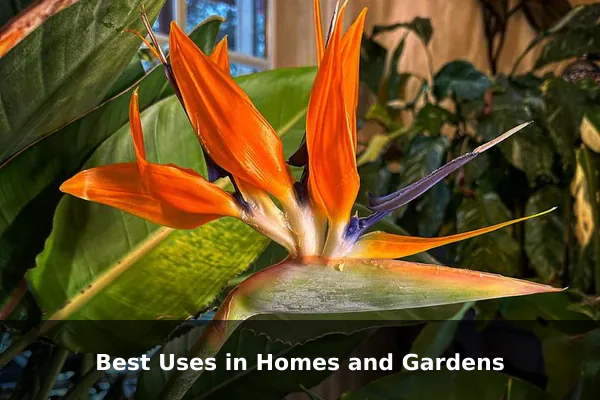
Because of its size and light needs, Bird of Paradise rewards thoughtful placement.
- Bright living rooms: Near south- or west-facing windows.
- Sunny patios: In large containers that can be moved indoors before cold weather.
- Tropical borders: Massed with palms, cannas, or heliconias in frost-free zones.
- Entryway accents: A single specimen in a tall pot creates a resort-style welcome.
Quick Buyer and Care Checklist
- Choose a plant with firm, upright leaves and no brown crispy edges.
- Check for pests under leaves and along stems before buying.
- Provide the brightest spot available indoors.
- Water thoroughly, then let the top of the soil dry slightly.
- Repot only when truly root-bound; crowded roots can encourage flowering.
- Keep away from pets and rinse leaves occasionally to remove dust.
Conclusion
Bird of Paradise earns its place among the world’s most iconic ornamental plants thanks to bold foliage, unforgettable flowers, and surprising adaptability to both indoor and outdoor life. Its benefits are primarily decorative, architectural, and biophilic rather than medicinal, and it rewards patient growers with one of the most striking blooms in horticulture.
With bright light, careful watering, and an awareness of its mild toxicity to pets and people, this tropical classic can serve as a long-lived centerpiece in your home or garden for many years.
Official references
- University of Florida IFAS Extension – Bird-of-Paradise – Extension reference for Strelitzia reginae identification, landscape use, growing conditions, cold tolerance, propagation, and pest issues.
- North Carolina Extension Gardener Plant Toolbox – Strelitzia reginae – University extension plant profile useful for care facts, morphology, growing conditions, and human toxicity/safety notes.
- ASPCA Animal Poison Control – Bird of Paradise Flower – Primary pet-safety reference for Strelitzia reginae toxicity to dogs, cats, and horses, including clinical signs and toxic plant parts.
- Kew Science Plants of the World Online – Strelitzia reginae – Authoritative taxonomy, accepted name, native range, and botanical description for correctly identifying the plant.
- Royal Horticultural Society – Strelitzia reginae – Established horticultural source for garden and houseplant care guidance, hardiness, light, and cultivation details.
