

The Dracaena is one of the most recognizable indoor foliage plants in modern homes and offices. With its sword-like leaves, upright stems, and architectural silhouette, it offers a bold, sculptural look while remaining surprisingly forgiving for beginners. From the classic Dracaena fragrans to slender, cane-like cultivars, this plant earns its place as a long-term decorative companion.
Beyond looks, Dracaena is often praised for being low-maintenance and adaptable to typical indoor light. However, some popular claims—especially around air purification—deserve a careful, evidence-aware look. It is also important to know early on that Dracaena is considered toxic to cats and dogs, so placement matters in pet households.

What Is a Dracaena Plant?
Dracaena is a genus of tropical foliage plants known for their strap-shaped leaves and woody, cane-like stems. According to the Royal Botanic Gardens, Kew (Plants of the World Online), Dracaena fragrans is a widely accepted species native to tropical Africa, and it serves as the botanical reference point for many of the cultivars sold as houseplants.
Common Species You May See
- Dracaena fragrans — often labeled “corn plant,” with broad, arching leaves.
- Dracaena marginata — slim, spiky leaves on thin canes.
- Dracaena reflexa — bushier growth with variegated foliage.
Names and groupings have been revised by botanists over time, so the scientific naming on plant labels may not always match current taxonomy. For accurate identification, consult primary botanical references.
Key Benefits of Growing Dracaena Indoors
Most of the practical benefits of Dracaena are decorative and lifestyle-related rather than medical. Used thoughtfully, it can support a calmer, greener indoor environment.
Visual and Functional Benefits
- Bold, vertical structure that fills empty corners and floor space.
- Long-lasting foliage that stays attractive for years with basic care.
- Beginner-friendly tolerance of low to medium indirect light.
- Office-suitable due to slow growth and modest watering needs.
- Biophilic value, contributing to a more natural, restful interior.
Air-Purifying Claims: What the Evidence Really Means
You will often see Dracaena promoted as an “air-purifying plant.” This claim traces back largely to a NASA chamber study from the late 1980s, which tested several houseplants—including Dracaena—against specific airborne chemicals in sealed conditions.
The U.S. Environmental Protection Agency cautions that real homes are not sealed chambers, and that source control and ventilation are far more reliable strategies for improving indoor air than relying on houseplants. In other words, Dracaena can be a pleasant part of a healthier indoor setup, but it should not be treated as a substitute for proper airflow or filtration.
How to Talk About It Honestly
- Yes: Dracaena is a low-maintenance, attractive indoor plant.
- Maybe: It may contribute modestly to a greener indoor environment.
- No: It is not a proven, standalone air-purification device.
Basic Dracaena Care Requirements
According to the North Carolina Extension Gardener Plant Toolbox, Dracaena prefers bright, indirect light and steady, moderate conditions. The following routine works for most common cultivars.
Light, Water, and Soil
- Light: Bright, indirect light is ideal. It tolerates lower light but grows slowly there. Avoid harsh direct sun, which can scorch leaves.
- Water: Let the top 2–3 cm of soil dry between waterings. Overwatering is the most common cause of decline.
- Soil: A well-draining houseplant mix in a pot with drainage holes.
- Temperature: Comfortable room temperatures, away from cold drafts and heating vents.
- Humidity: Average household humidity is usually enough; very dry air can cause brown leaf tips.
Common Care Mistakes
- Watering on a fixed schedule instead of checking the soil.
- Placing the plant in deep shade and expecting fast growth.
- Ignoring drainage and letting roots sit in water.
Common Problems and Easy Fixes
Most Dracaena problems are environmental and reversible once spotted early.
Troubleshooting Guide
- Brown leaf tips: Often linked to dry air, inconsistent watering, or, as noted by extension sources, sensitivity to fluoride and certain salts in tap water. Try filtered or rainwater if tap water seems to cause issues.
- Yellowing lower leaves: Some shedding is normal; widespread yellowing usually signals overwatering.
- Drooping or soft stems: Possible root rot from soggy soil—check roots and repot if needed.
- Pests: Watch for spider mites, mealybugs, and scale. Wipe leaves and treat early with appropriate, label-directed methods.
Pet and Child Safety Notes
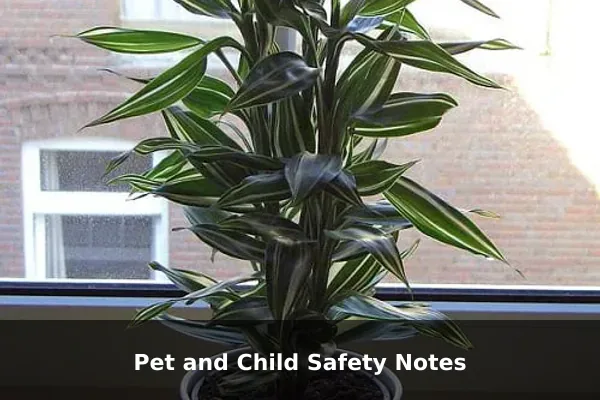
The ASPCA lists Dracaena as toxic to dogs and cats. Reported clinical signs may include vomiting (sometimes with blood in cats), loss of appetite, drooling, and depression. Saponins are typically cited as the toxic principle.
Practical Safety Tips
- Keep Dracaena out of reach of curious pets and small children.
- Pick up fallen leaves promptly, since they can still be chewed.
- If ingestion is suspected, contact a veterinarian or a local poison control resource without delay rather than waiting for symptoms to worsen.
Best Places to Display Dracaena at Home
Because Dracaena is tall, narrow, and tolerant of indirect light, it works well in many rooms—provided placement is safe and stable.
Good Placement Ideas
- Living room corners near a bright window but out of direct sun.
- Home offices beside a desk for a calming visual anchor.
- Entryways and hallways with reasonable daylight.
- Bedrooms, kept away from pet-accessible floor zones if relevant.
Avoid placing Dracaena directly above heaters, next to drafty doors, or in spots where pets routinely rest or play.
Is Dracaena the Right Plant for You?
Dracaena is an excellent choice if you want a striking, low-maintenance indoor plant that rewards consistent but minimal attention. It suits beginners, busy professionals, and offices that need long-lasting greenery without constant fuss. If your household includes cats or dogs, it can still work—but only with thoughtful placement and awareness of its toxicity.
Treat its decorative and lifestyle benefits as the main draw, view any air-quality contribution as a modest bonus rather than a guarantee, and you will likely find Dracaena to be one of the most rewarding foliage plants you can grow indoors.
Official references
- Royal Botanic Gardens, Kew – Plants of the World Online: Dracaena fragrans – Authoritative taxonomy, accepted scientific name, native range, synonyms, and botanical classification for Dracaena fragrans.
- North Carolina Extension Gardener Plant Toolbox – Dracaena fragrans – University extension source for identification, care needs, common cultivars, pests, fluoride sensitivity, and low-severity human/pet toxicity notes.
- ASPCA Animal Poison Control – Dracaena – Primary pet safety reference listing Dracaena spp. as toxic to dogs and cats, with toxic principle and clinical signs.
- U.S. EPA – Indoor Air Pollution: An Introduction for Health Professionals – Official indoor-air reference that cautions against overclaiming houseplant air-purification benefits and emphasizes ventilation over plants.
- NASA Technical Reports Server – A Study of Interior Landscape Plants for Indoor Air Pollution Abatement – Original NASA chamber-study report often cited for plant air-purification claims; useful as a primary source when explaining limits of the claim.
